




Diabetes Is Not a Personal Failure
The myth that diabetes comes from poor choices or laziness ignores genetics, biology, and the environment people live in, and it makes an already hard condition harder to manage.
If you live with diabetes, you have probably heard some version of this comment: “Well, did you eat right? Did you exercise enough?” It shows up in offhand jokes, in comments from strangers, sometimes even from healthcare providers. The message underneath is always the same: you did this to yourself.
That message is not just unkind. It is not supported by the science.
Naming the myth
The myth is that diabetes, especially type 2 diabetes, is caused by personal failure: laziness, poor willpower, or bad food choices. The Centers for Disease Control and Prevention defines this pattern directly as diabetes stigma, describing it as negative attitudes, judgment, or discrimination against someone because they have diabetes, rooted in the false idea that unhealthy choices alone caused their diagnosis.
Why the myth is wrong
Diabetes is far more complicated than a lifestyle report card. According to the CDC, type 1 diabetes happens because the body cannot make insulin, and type 2 diabetes happens because the body does not use insulin well. Neither is a simple result of willpower.
Multiple factors influence a person’s risk of developing type 2 diabetes:
- Genetics and family medical history play a major, well-documented role, according to Healthline’s review of diabetes stigma research.
- Age, race, and ethnicity affect risk in ways that have nothing to do with personal behavior.
- Underlying conditions like an underactive thyroid or Cushing syndrome can drive weight changes that lead to a diabetes diagnosis, independent of diet or exercise.
- Social determinants of health, including access to affordable healthy food, safe places to exercise, and quality healthcare, shape risk at a population level, according to researchers at Oregon Health and Science University’s Moore Institute. As OHSU researchers point out, the 442 million people worldwide living with diabetes cannot all be personally failing. There is more to the story than individual choice.
- Even environmental exposures, such as air pollution, have been linked in research to higher rates of type 2 diabetes.
How common and damaging this stigma really is
This is not a rare or minor issue. In a survey covered by Diabetes UK, 86 percent of people with type 1 diabetes and 75 percent of people with type 2 diabetes reported experiencing judgment related to their condition. Nearly half of respondents had personally encountered the specific misconception that diabetes is caused by eating too much sugar.
Peer-reviewed research archived through the National Institutes of Health found that the single most common experience of diabetes stigma, reported by 81 percent of people surveyed, was being perceived as having a character flaw or a failure of personal responsibility. This was more common than any other type of stigma the study measured, including being seen as a burden on the healthcare system.
Stigma does not just feel bad. It gets in the way of care. Feeling blamed for a diagnosis can lead people to avoid checkups, skip mentioning symptoms, or hide their condition from coworkers and even family, according to stigma researchers cited by the CDC. That kind of avoidance can delay treatment and worsen outcomes, the opposite of what stigma pretends to encourage.
The insulin misconception
One specific version of this myth deserves its own callout: the idea that needing insulin means someone has “failed” to manage their type 2 diabetes well enough. Type 2 diabetes is a progressive condition. Needing insulin over time is often a predictable part of the disease process, not evidence of a person doing something wrong, according to Healthline’s clinical review of diabetes stigma.
What a more accurate view looks like
- Diabetes results from a combination of genetics, biology, environment, and social conditions, not a single personal choice.
- Type 1 diabetes has no connection to diet, exercise, or lifestyle at all.
- Even for type 2 diabetes, where lifestyle factors can play a role, they are only part of a much larger picture that includes family history and circumstances often outside a person’s control.
- Progression of the disease, including the eventual need for insulin, is common and expected for many people, not a personal shortcoming.
- Blame and judgment do not improve health behaviors. They add shame on top of a medical condition that already requires daily management.
Key takeaways
- Diabetes stigma is built on the false idea that the condition results from personal failure or poor choices.
- Genetics, family history, underlying health conditions, and social determinants of health all shape diabetes risk, often more than individual behavior does.
- Type 1 diabetes has no link to lifestyle choices, and even type 2 diabetes involves far more than diet and exercise alone.
- The majority of people with diabetes report experiencing stigma, most commonly being blamed for causing their own condition.
- Needing insulin over time is a normal part of how type 2 diabetes can progress, not a sign of failure.
- Reducing blame and judgment supports better health outcomes, because shame does not motivate care, it discourages it.
Sources
- Centers for Disease Control and Prevention, Diabetes Stigma https://www.cdc.gov/diabetes/articles/diabetes-stigma.html
- Healthline, How To Handle Type 2 Diabetes Blame, Shame and Stigma https://www.healthline.com/health/type-2-diabetes/dealing-with-stigma-blame-shame
- Oregon Health and Science University, Moore Institute, The Social Determinants of Diabetes https://www.ohsu.edu/school-of-medicine/moore-institute/social-determinants-diabetes
- Diabetes UK, 86% of People With Type 1 and 75% of People With Type 2 Experience Judgement About Their Condition https://www.diabetes.org.uk/about-us/news-and-views/86-people-type-1-and-75-people-type-2-experience-judgement-their-condition
- National Institutes of Health, PMC, Stigma in People With Type 1 or Type 2 Diabetes https://pmc.ncbi.nlm.nih.gov/articles/PMC5241772/
Share:
You Might Also Connect With
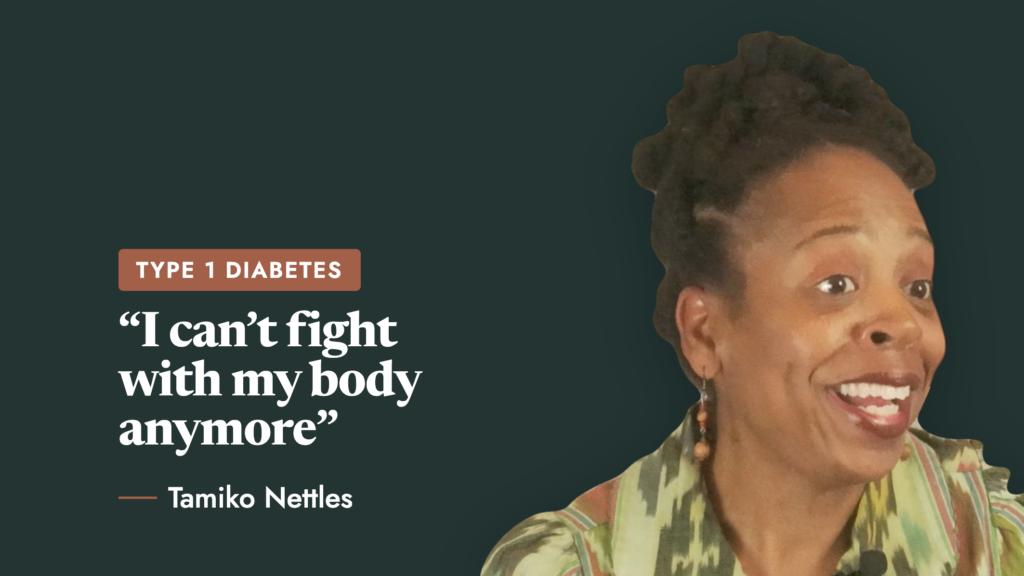
Tamiko’s Type 1 Diabetes Story: More Than 20 Years of Learning to Listen to Her Body
Tamiko was diagnosed with type 1 diabetes in college, just before spring break. Here is how she learned to advocate for herself and make peace with her body.

Questions to Ask at Your Diabetes Care Team Appointment
A practical guide to getting the most out of your diabetes visit, from blood sugar targets to cost to emotional support.

He Wrote “Help Me” on a Steamy Mirror. It Was the Only Way He Could Ask.
Jalen was two years old during his first asthma attack. At ten, a severe flare sent him to the ICU for a week, and his mother, Corinne, learned just how life threatening childhood asthma can be.
